A computer that’s slowed to a crawl is maddening, but it’s rarely a sign the hardware is finished. Far more often the culprit is years of piled-up software, a stuffed hard drive, or one resource-hungry program chewing through everything. The good news: most of the fixes that work cost nothing, and the single most powerful upgrade is surprisingly cheap. This guide runs through them in order, from the easiest free tweaks to the hardware swaps that deliver the biggest jump. The general steps apply to both Windows and Mac.
First, a Safety Net: Back Up Your Data
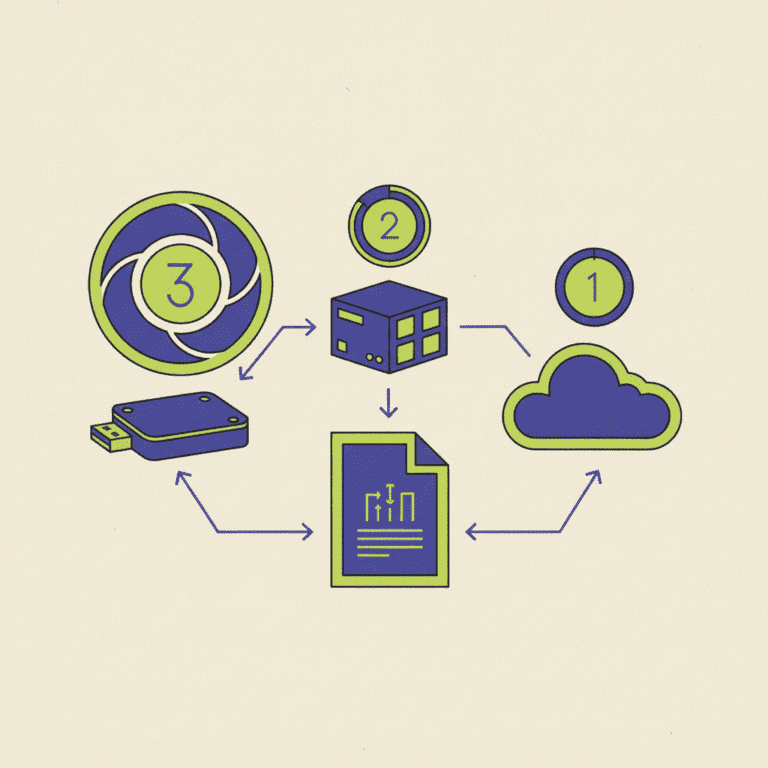
Before you change anything significant, and definitely before any hardware swap or system reinstall, make a current backup of your important files. The cleanup steps below are low-risk. But a backup costs you almost nothing and protects you completely if something goes sideways. Copy your irreplaceable files to an external drive or a cloud service before you go on.
Step 1: The Free Fixes (Start Here)
Start with the changes that cost zero and often deliver an immediate lift. Work through them in order.
- Restart the computer. Sounds trivial. But a machine left running for days or weeks piles up clutter in memory and stalled processes, and a full restart wipes them out. It’s the single fastest thing to try.
- Install pending updates. Apply the waiting operating-system and app updates, then restart. Updates routinely fold in performance and stability fixes, and an out-of-date system can misbehave in ways that feel exactly like slowness.
- Free up disk space. A nearly full drive drags the whole system down, because the operating system needs free working room to breathe. Keep a healthy margin open. Empty the trash, clear out files you no longer need, and uninstall programs you never open.
- Trim your startup programs. Plenty of apps quietly launch at boot and then run in the background forever, eating memory and slowing both startup and everyday use. Windows and Mac both let you review and disable which apps start automatically. Switch off anything that doesn’t need to be running constantly.
- Close what you’re not using. Dozens of open browser tabs and a few heavy apps at once will bog down any machine, especially one short on memory. Closing what you’re not actively touching frees up resources on the spot.
Step 2: Find Out What Is Actually Slowing Things Down
Still sluggish? Stop guessing and look at what’s eating the resources. Both platforms bundle an activity monitor that lists running programs and how much processor, memory, and disk each one is using.
- Open the built-in system monitor: Task Manager on Windows, or Activity Monitor on Mac.
- Sort by processor usage, then by memory usage, to see which programs sit at the top.
- Watch for a single app consistently hogging resources. Sometimes one stuck or misbehaving program is the whole problem, and quitting or reinstalling it fixes everything.
This step turns a vague “my computer is slow” into a specific, fixable cause, and it can spare you an upgrade you didn’t actually need.
Step 3: Clear Out Malware and Browser Bloat
Malware and a cluttered web browser are two common, easily overlooked causes of slowness. Run a scan with reputable security software to rule out anything malicious running in the background. Then deal with your browser, where most people spend most of their day: pull out extensions and add-ons you don’t use, since each one quietly consumes resources, and clear the cache if the browser has turned sluggish. A leaner browser on its own can make day-to-day use feel noticeably snappier.
Step 4: The Upgrade That Makes the Biggest Difference
If your machine still runs on a traditional spinning hard disk drive (HDD), switching to a solid-state drive (SSD) is, for most older computers, the single most transformative upgrade you can make. An SSD has no moving parts and reads data far faster, so it slashes boot times, app launches, and file operations across the board. An old laptop that felt unbearable can feel close to new after this one change.
- Check whether your computer’s storage can even be upgraded. Many older desktops and laptops allow it, though some newer ultra-thin models have the storage soldered in place and can’t be changed.
- Decide whether to migrate your existing system to the new drive with cloning software, or do a clean install of the operating system. A fresh install sweeps out years of accumulated clutter and often gives the cleanest result.
- Not comfortable opening the machine? A repair shop can do the swap affordably. Just make sure your backup is current before any of it.
Step 5: Consider More Memory
If you regularly run a stack of programs at once or keep a huge number of browser tabs open, and your activity monitor shows memory pinned at the top, adding more RAM can help. Like storage, memory is upgradeable on many older machines and fixed on some newer ones, so check your specific model first. More memory mainly helps with heavy multitasking. If your slowdown is really coming from a full disk or an old hard drive, an SSD will do far more for you than extra RAM.
Step 6: The Clean Reset (Last Resort)
When a computer has soaked up years of software cruft, a clean reinstall of the operating system can hand back much of its original speed. This erases the drive and starts over, so it’s a bigger step. Back up everything first, and make sure you can reinstall the programs you depend on. Windows and Mac both include a built-in option to reset or reinstall the system. Done properly, this often makes an older machine feel dramatically faster than any single tweak could.
Knowing When to Upgrade Instead
These steps will revive most aging computers. But not every machine is worth saving. If the hardware is genuinely old, if it can no longer run a supported, secure version of its operating system, or if the cost of upgrades creeps toward the price of a capable replacement, putting that money into a new machine is the smarter call. A device that can no longer get security updates is an especially strong reason to move on.
The practical takeaway: work from cheapest to most involved. Restart, update, free up disk space, and trim startup apps first, then lean on the built-in activity monitor to pin down any single culprit. If the machine is still slow and runs an old hard drive, an SSD is the change most likely to make it feel new again. Just back up before you touch the hardware.