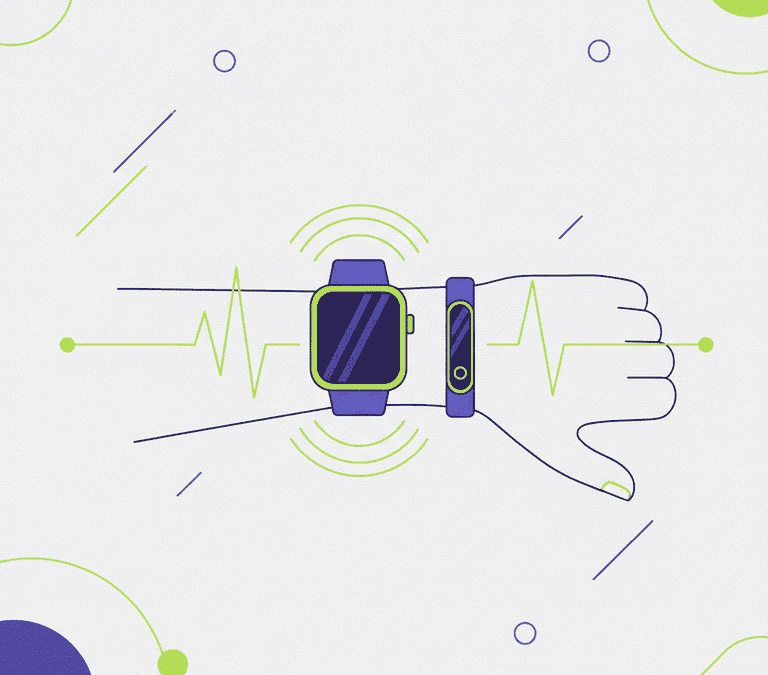
Modern smartwatches and fitness bands promise a tiny clinic strapped to your wrist: heart rate, blood-oxygen estimates, sleep stages, stress, sometimes even an electrical heart reading. It is genuinely impressive kit, and for a lot of people it has made everyday health visible and motivating in a way nothing else managed. But a fair question trails all that capability. Do the sensors actually work? And how much should you trust what they tell you?
The honest answer: they work well for some things, roughly for others, and badly under certain conditions. Knowing which is which is the whole game. Get that straight and a wearable earns its place. Miss it and the thing quietly misleads you.
How the Sensors Actually Work
Most wrist-based health tracking comes down to shining light into your skin. The technique is called photoplethysmography, and it works like this: small LEDs push light into the tissue, and a sensor reads how much bounces back. Blood absorbs light, and the volume of blood under your skin rises and falls with every heartbeat — so from those tiny fluctuations the device can infer your pulse. The same optical trick underpins blood-oxygen estimates, which compare how different wavelengths get absorbed.
That word, infer, is doing a lot of work. The watch is not measuring your heartbeat directly the way a chest strap or a clinical monitor does. It is catching an optical signal and running it through algorithms that estimate a number. The estimate is often very good. It is also exactly why certain conditions throw it right off.
Where Wrist Sensors Are Reliable
At rest and during steady, predictable activity, optical heart-rate sensors on decent devices tend to do well. Sitting at your desk, sleeping, holding a steady jog on flat ground — a good wearable’s pulse reading usually lands close to what a dedicated monitor would show. That is why resting heart rate, captured during calm stretches, is one of the more trustworthy figures a wearable produces.
Step counting and movement detection, handled by motion sensors rather than the optical system, are dependable enough for everyday purposes too. Not laboratory-precise. But consistent — which is what most people actually need.
Where They Struggle
Accuracy drops under several well-documented conditions, and it pays to know them.
Vigorous or irregular movement is the big one. When your wrist is jerking around sharply and unpredictably — interval training, weightlifting, racquet sports — the optical signal gets disrupted by motion, and readings lag or wander. Steady activities are far kinder to these sensors than start-stop ones.
Skin tone can affect optical readings, because the pigment in skin absorbs some of the light the sensor depends on. Research has found accuracy can drop for people with darker skin under some conditions, particularly during exercise. Manufacturers work to soften this, but it remains a real limitation worth knowing about.
Fit and physical quirks matter as well. A band worn too loose lets in stray light and movement. Tattoos over the sensor, dense hair, sweat, even wrist size can all degrade signal quality. A snug fit on the upper wrist — not jammed against the wrist bone — gives the sensor its best shot.
And the fancier the metric, the less you should lean on it. Estimates of heart-rate variability, sleep stages, stress, and blood oxygen pile on more inference and more assumptions, so read them as rough indicators rather than precise figures.
Wellness Feature or Medical Device?
This is the distinction that matters most, and it is the one people get wrong constantly. In many regions, a health-tracking feature is regulated based on what the maker claims it does. A feature marketed for general wellness — tracking trends, nudging you to move, giving you a rough sense of a number — typically skips formal regulatory review. A feature that claims to detect, diagnose, or help manage a specific medical condition gets held to a far higher standard and may be cleared by a health regulator only after testing.
So on the very same watch, a casual blood-oxygen or stress reading might be a general wellness estimate, while an electrical heart-rhythm feature carries a formal clearance. The wellness features are not worthless. They are simply not validated to clinical standards, and they are usually labelled to say so. The practical upshot: a notification from a cleared feature is worth taking seriously and raising with a clinician. A one-off wellness reading is a prompt to pay attention, not a diagnosis.
How to Get Real Value From the Numbers
The most useful mindset is simple. Treat a wearable as a trend tracker, not a measuring instrument. A single reading can be knocked off by movement, fit, or plain chance. A pattern over weeks — a resting heart rate creeping up, sleep that is consistently shorter, activity that has quietly tailed off — carries genuine signal, because the random errors average out and the real change shows through.
A few habits help. Wear the device consistently and snugly, so your data is comparable day to day. Measure yourself against your own baseline, not against other people, because “normal” varies enormously between individuals. Handle alarming single readings with calm curiosity: take it again, check the fit, see whether the pattern holds. And never use a consumer wearable to self-diagnose or to overrule how you actually feel. If something seems wrong, that is a conversation for a medical professional with proper equipment — full stop.
The Takeaway
Wrist wearables genuinely work, within limits. They are good at the basics in calm conditions, weaker during vigorous or irregular movement, and thrown off by things like skin tone and fit. The numbers are best understood as informed estimates, and their real power lies in the trends they reveal over time, not in any single figure. Know which features are validated and which are just for wellness. Watch your own patterns instead of chasing precision. And let a wearable do what it does best — keep you aware of and engaged with your own health — while leaving diagnosis to the people and tools actually built for it.